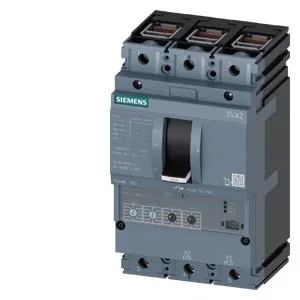
The 3VA2110-5HN36-0BA0: The 187 kA at 240 V is the headline number, but the real-world figure for most industrial 400 V class panels is 121 kA at 415 V (and the same at 440 V). At 500 V the rating drops to 75.6 kA, and at 690 V it's 3.7 kA, which tells you this breaker is sized for 400 V class systems, not 690 V drives.
Thermal performance and derating
That's unusual — most MCCBs start derating above 40 °C. The 12.5 W maximum power loss is the heat you need to vent from the enclosure; at 100 A continuous, that's manageable in a standard steel enclosure with passive ventilation, but pack multiple breakers tight and the internal temperature rise adds up.
Undervoltage release and auxiliary options
There's no voltage trigger or trip indicator on this unit, and no communication function built in. The supplied basic switch is order code 3VA21105HN360AA0.
No ground-fault monitoring version on this unit, so if you need GF protection, you're adding an external module or choosing a different suffix.
Environmental range
No communication function, so this is a straight electromechanical breaker — no Modbus, no PROFIBUS, no remote monitoring.