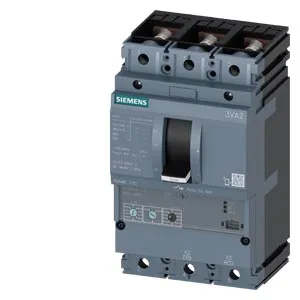
This is a Siemens SENTRON 3VA2216-5MN32-0CC0 molded case circuit breaker purpose-built for motor protection. It's a 3-pole unit rated for a continuous 160 A, with an ETU350M electronic overcurrent release handling the trip curve. The interrupting capacity is substantial: 187 kA at 240 V, 121 kA at 415 V and 440 V, 75.6 kA at 500 V, and 17 kA at 690 V.
Thermal derating and what it means for the panel
At 55 °C it's still at 153.6 A, and at 70 °C it's at 144 A. That's a shallow derating curve — you don't lose much capacity even in a warm enclosure. Maximum power loss is 75 W, so factor that into your panel heat budget if you're stacking several of these.
Built-in release and auxiliary options
No voltage trigger or communication function here — this is a straightforward protection device, not a smart breaker. Endurance is rated at 20,000 operations.
It's a panel-mounted breaker — no DIN-rail snap-on here, so plan for screw-mounting in your enclosure layout.