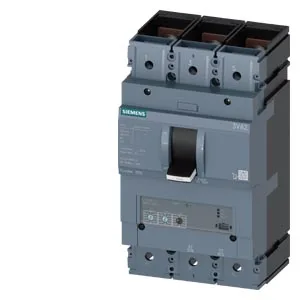
The Siemens SENTRON 3VA2325-5HL32-0CA0 is a 3-pole molded case circuit breaker rated for 250 A continuous current across the full 40 °C to 70 °C ambient range — no derating curve to chase. The interrupting ratings climb to 187 kA at 240 VAC and hold at 121 kA through 440 VAC, then step down to 75.6 kA at 500 VAC and 7.5 kA at 690 VAC. That's enough SCCR headroom for most industrial service-entrance panels on 480 V or 400 V systems. Max power loss is 40 W, which matters for enclosure thermal budgeting when you're stacking several breakers in a row.
What the undervoltage release means in practice
It's wired separately from the main power path, so you need a control voltage source (typically 24 VDC or 120 VAC, depending on the release coil ordered). No auxiliary switch is fitted on this variant, so if you need remote status feedback, plan for an add-on auxiliary contact block.