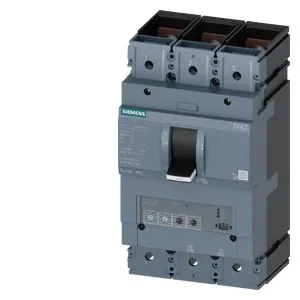
The Siemens SENTRON 3VA2325-6HN32-0CL0 is a 3-pole molded case circuit breaker rated for 250 A continuous current at 40 °C, with a maximum breaking capacity of 242 kA at 240 V and 187 kA at 415 V.
For a 250 A frame, those are high-end ratings — you'd see these in heavy industrial switchboards with large transformer feeds or motor control centers where fault currents can exceed 100 kA.
Thermal derating and continuous current
That's unusual for an MCCB; most frames start dropping current above 40 °C. It means you can pack this breaker into a warm enclosure or mount it next to other heat sources without recalculating the load.
Auxiliary and alarm switching
This variant ships with two auxiliary switches plus a trip alarm and an electrical alarm switch (HQ type). That gives you remote status: one set for breaker open/closed, one for tripped vs healthy, and one for electrical fault. The HQ alarm switch is typically wired into a PLC input or annunciator panel so a trip event triggers an immediate alarm without waiting for a polling cycle.