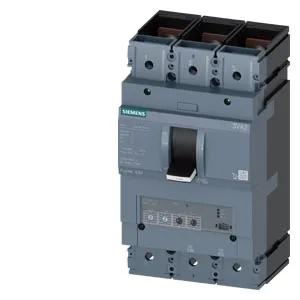
That 400 A holds flat from 40 °C up to 50 °C, then derates to 384 A at 55 °C and 360 A at 70 °C — so in a warm enclosure you still have most of the rating. Breaking capacity is 242 kA at 240 V, 187 kA at 415 V and 440 V, 121 kA at 500 V, and 40 kA at 690 V — that 187 kA at 415 V is the figure most plant distribution systems care about for high-fault bus work. The auxiliary contact block is a 2-switch plus 1 trip-alarm configuration (HQ type), so you get two form-C aux contacts and a separate alarm contact that changes state only on a trip event, not on manual open. Latching endurance is rated at 15,000 cycles, which is typical for a 400 A frame used in main or feeder duty — not for frequent switching, but for protection where the breaker stays closed most of the time.
The breaker measures 138 mm wide, 248 mm tall, and 110 mm deep. The 110 mm depth includes the rotary handle and rear terminals; allow clearance for cable bending radius below the line and load lugs.
Maximum power dissipation is 66 W at rated current. That matters for enclosure sizing — a 400 A MCCB dumping 66 W into a sealed cabinet needs ventilation or derating if the ambient inside hits 55 °C or higher. The derating curve from the spec table shows the breaker loses 40 A between 50 °C and 70 °C, so panel builders should place it away from other high-heat devices or provide forced airflow.