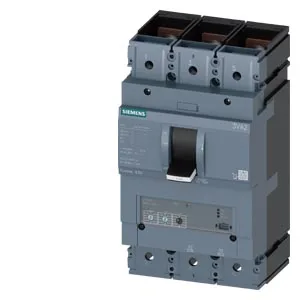
It carries a rated continuous current Iu of 630 A and delivers 187 kA interrupting capacity at 240 V, 121 kA at 415 V, and 75.6 kA at 500 V — numbers that define the fault-clearing headroom for a main or feeder breaker in an LV distribution board. The overcurrent release is an ETU320 electronic trip unit, and the auxiliary release is a shunt trip (STL). Two HQ auxiliary switches come fitted as standard.
For a 630 A frame, these figures place it well above typical utility fault levels at the service entrance, so selectivity with downstream breakers is achievable without exceeding the breaker's capability. Mechanical endurance is listed at 15 000 cycles — not a daily-switching device, but fine for infrequent manual isolation or backup protection where the breaker stays closed most of its life.
The breaker measures 248 mm high by 138 mm wide by 110 mm deep. That 138 mm width is the 3-pole frame footprint — check the existing busbar or cable lug spacing before committing the gland plate layout. The depth of 110 mm includes the arc chamber and terminal area, so allow clearance for outgoing cable bends.