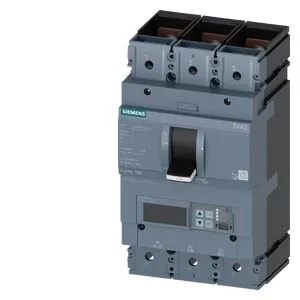
Auxiliaries, Release, and Communication
The communication function (is present, though the protocol isn't specified in this data) means it can integrate with a BMS or SCADA system for remote monitoring and trip indication. The trip indicator is present, so after a fault you get a visual flag — no guesswork on whether it tripped or someone switched it off. No ground-fault monitoring version is included on this order code; if you need GF protection, you'd look at a different suffix in the 3VA family.
The width of 138 mm means it takes up roughly 5.4 inches of rail space — factor that into your panel layout if you're packing multiple breakers side by side. Power loss at full rated current is 164.5 W maximum. That's heat that has to be dissipated inside the enclosure — if you're grouping several of these in a sealed cabinet, you'll want to account for the thermal load in your cooling calculation.