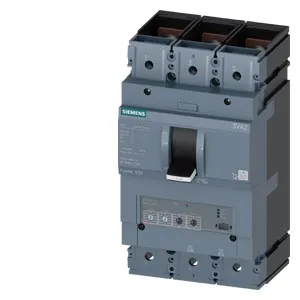
630 A MCCB with thermal derating mapped
That 630 A is the base rating; the evidence provides a full derating curve from 612 A at 45 °C down to 520 A at 70 °C, so a panel builder running a 50 °C enclosure needs to size the branch at 593 A, not the nameplate 630 A. Breaking capacity runs 242 kA at 240 V AC, 187 kA at 415 V and 440 V, 121 kA at 500 V, and 9 kA at 690 V — the 690 V figure is the hard ceiling for this frame. Maximum power loss is 164.5 W, which drives the enclosure thermal budget — a sealed stainless cabinet may need forced ventilation or a larger volume to stay under the 70 °C operating maximum.
The 110 mm depth is the critical dimension for shallow gland-plate enclosures — verify the back-can clearance against the DIN-rail mounting foot before committing the cutout. Width at 138 mm is standard for a 630 A 3-pole frame; adjacent breakers in a multi-panel lineup need the manufacturer's side-to-side spacing (typically zero for SENTRON, but check the installation guide for arc containment). No auxiliary switch is fitted; if remote status indication is needed, the accessory slot accepts a later-added auxiliary switch block. No ground-fault monitoring version is included, so this is a straight line-protection breaker for feeder or main applications.
What the breaking capacity ratings mean for the buyer
At 415/440 V the rating drops to 187 kA, still well above typical utility fault currents in most industrial installations. For a 400 V panel fed from a 2 MVA transformer, the prospective short-circuit current is usually under 50 kA, so this breaker has headroom.