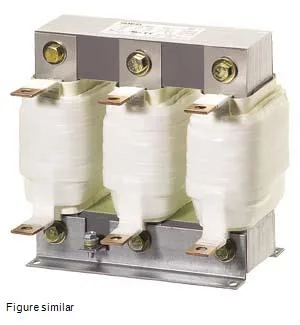
What this line reactor does in the panel
The Siemens 4EU2432-0EH00-4CA0 is a 3-phase line reactor rated for 23.4 A continuous current with a maximum of 26 A, designed to limit harmonic distortion and reduce voltage notching on variable-frequency drive inputs. It mounts in the drive line-up — typically between the supply and the drive input — and uses flat-type terminals for the main power connections. The 2.1 mH inductance per phase provides enough impedance to smooth current spikes from the drive's rectifier stage, which extends the life of the DC bus capacitors and reduces nuisance tripping on upstream protective devices. Rated for 400 V AC, 3-phase, this reactor is a common fit for 400 V class drives in the 15–22 kW range depending on the drive's input current draw. No washdown rating here; keep it dry and away from conductive dust. Thermal class F per IEC 60085 means the winding insulation can handle a 155 °C hot-spot temperature continuously. The ambient temperature rating of 40 °C is the reference point for the 23.4 A rating; if your panel ambient runs hotter, you'll need to derate the current or add forced cooling.
Footprint: 0.225 m wide × 0.21 m tall × 0.136 m deep. That's about 225 mm × 210 mm × 136 mm. The flat-type terminals accept busbar or cable lugs — no ring-tongue or fork terminals here; plan for M8 or similar bolted connections. Mounting is via the reactor's own baseplate; it's not a DIN-rail snap-on part, so allocate panel space and drill holes for the mounting pattern.
The 23.4 A rated current (26 A max) at 40 °C ambient is the continuous thermal limit. If your drive draws 25 A at full load, this reactor is sized correctly. The 2.1 mH inductance is the key value for harmonic mitigation — it's a standard 3% impedance reactor for a 400 V drive at 50 Hz. If you need a different impedance (say 5% for a weak supply), this isn't the one. The 0 Hz minimum frequency in the spec is a data artifact — this is a passive inductive component, not a variable-frequency device. The reactor works at line frequency (50/60 Hz) and passes the drive's PWM output without issue.