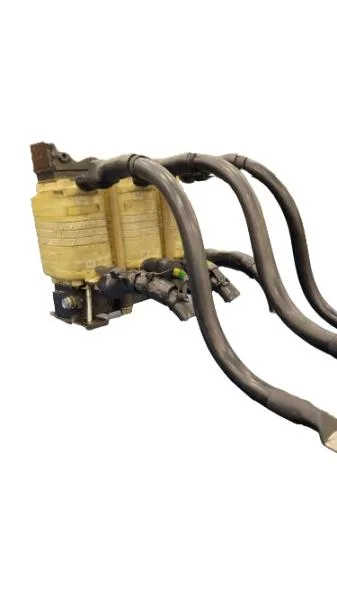
What this output reactor does in a VFD line
The 4EU2451-0AD00-0A is a Siemens SIDAC output reactor — a three-phase choke placed between a variable-frequency drive and the motor to limit dv/dt stress on the winding insulation and reduce bearing currents. It handles a maximum of 63 A and is rated for a 4000 Hz switching frequency, which covers most modern IGBT-based drives. The 0.27 mH inductance per phase smooths the PWM waveform, extending motor life on long cable runs or with older rewinds. Rated for 400 V AC three-phase input, this reactor is sized for a motor drive line where the inverter's carrier frequency hits 4 kHz. The IP00 enclosure means it's an open-frame component — mount it inside a panel or cabinet, not in a washdown area. The flat-type terminals accept busbar or crimp lugs, common in power distribution sections of a drive cabinet.
Thermal class and ambient limits
The reactor is built to thermal class H per IEC 60085, which means the insulation system can handle a continuous hot-spot temperature of 180 °C. The rated ambient temperature is 40 °C — standard for most enclosed drive cabinets. If your panel runs hotter than that, derate the continuous current per the thermal curve; the class H margin gives some headroom, but the 63 A maximum assumes 40 °C ambient.
Physical fit in the panel
Dimensions are 0.22 m wide by 0.21 m tall by 0.13 m deep — roughly the footprint of a small contactor or a two-pole breaker. It's an open-frame component (IP00), so plan for clearance around the flat-type terminals for lug access and air circulation. No DIN-rail clip; it bolts directly to the panel backplate.