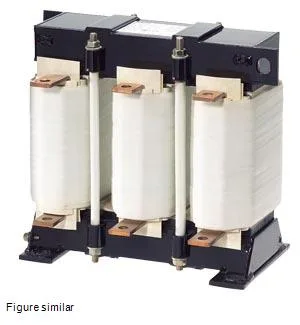
The Siemens SIDAC 4EU3631-1UA00-0A is a three-phase output reactor (output choke) rated for a maximum continuous current of 171 A and a rated frequency of 3000 Hz, with an inductance of 0.11 mH. It is designed to sit between a variable-frequency drive output and the motor, smoothing the PWM voltage spikes and limiting the rate of voltage rise (dV/dt) that can stress motor winding insulation over long cable runs.
The 171 A maximum current is the thermal limit under the specified conditions — it governs the largest motor load this reactor can handle continuously without saturating the core or exceeding the 401 W coil loss and 221 W iron-core loss. The 3000 Hz rated frequency tells you this reactor is wound for high-switching-frequency drives (common in modern IGBT-based VFDs), not for 50/60 Hz line reactors. At 0.11 mH, the impedance at 3000 Hz is about 2.07 Ω, which provides meaningful dV/dt reduction for a drive switching at 3 kHz or higher. The IP00 protection class means it is an open-frame component — no enclosure, no drip shield. The 40 °C ambient temperature rating and class H insulation (thermal class per IEC 60085) mean the winding can tolerate a 180 °C hot-spot temperature, giving headroom in warm panels or when the reactor is loaded near its maximum.
Where and how it is used
This output reactor is typically wired between the drive output terminals and the motor cable, inside the drive cabinet or a separate enclosure. The flat-type terminals accept busbar or cable lugs — no screw-clamp connectors, so plan for bolted connections. The 0.35 m width and 0.32 m height mean it takes up a fair amount of panel real estate; account for clearance around the terminals and for airflow over the core and coils.
That recognition is tied to the specific design and winding construction — verify the nameplate marking matches your panel's listing requirements.