What it is and what the ratings mean
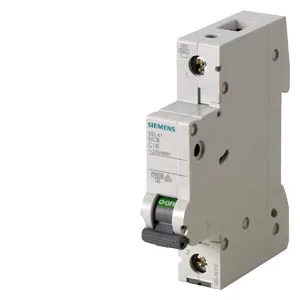
The Siemens 5SL4104-8 is a 1-pole SENTRON miniature circuit breaker with a D tripping characteristic, rated 4 A and breaking 10 kA per both EN 60898 and IEC 60947-2. The D-curve means it tolerates high inrush currents — typically 10–20× rated current before instantaneous trip — so it's the right choice for motor circuits, transformers, or other inductive loads that draw a heavy start surge without being a fault. The 10 kA SCCR at 400 V AC tells you it can safely interrupt a short-circuit fault up to that level without welding contacts or cascading upstream; that's standard for residential and light commercial distribution boards, not for high-fault industrial mains. Single-pole construction (1P) means it switches only the phase conductor — use it in single-phase branch circuits or as a phase leg in multi-pole assemblies. The 18 mm width (one modular unit) snaps onto standard DIN rail and leaves room for adjacent breakers or auxiliaries in a crowded panel.
Where it fits and how it mounts
Mounts in any position on standard DIN rail; the 70 mm installation depth and 76 mm overall depth clear most enclosure backplates without interference. IP20 with connected conductors — fine inside a distribution board or control panel that stays dry and clean; not rated for washdown or outdoor exposure. Pollution degree 2 and overvoltage category III confirm it's built for fixed-installation environments where transient overvoltages are controlled by upstream SPDs. Sealable design lets you lock the toggle in the OFF position for lockout/tagout. Halogen-free and silicon-free materials reduce corrosive off-gassing in a fault — relevant for clean rooms or electronics manufacturing lines where silver migration matters.
What it doesn't do
Rated for AC circuits only — the 72 V DC maximum is a derated figure for the D-curve mechanism, not a primary application. If you need DC branch protection at higher voltages, this isn't the breaker. The 10 000 mechanical operating cycles is typical for an MCB in residential/infrastructure service; don't spec it for frequent switching duty where a contactor or motor-protective breaker would live longer.