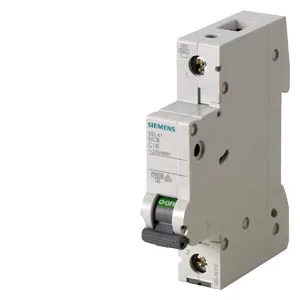
SENTRON 5SL4132-7 – 1-pole C-curve 32 A MCB
The Siemens 5SL4132-7 is a 1-pole miniature circuit breaker from the SENTRON series, rated 32 A with a C tripping characteristic. It provides a 10 kA breaking capacity under both EN 60898 and IEC 60947-2, so it safely interrupts fault currents up to that level on a 230/400 V AC supply — sufficient for most residential and light commercial distribution boards. The single-module width (18 mm) and 76 mm depth let it snap onto standard DIN rail in any mounting position, which simplifies panel layout when you need to pack multiple poles into a tight enclosure. It is IP20 rated with connected conductors, meaning it is protected against finger contact but not water ingress — standard for inside a distribution cabinet.
What the ratings mean for fit
The C-curve (tripping characteristic class C) means the magnetic trip activates at 5 to 10 times rated current — designed for moderate inrush loads like small motors, lighting banks, and transformer-fed circuits where a B-curve would nuisance trip. The 32 A rating on a 1-pole breaker handles single-phase branch circuits up to that current; on a 230 V line that covers roughly 7.4 kW of resistive load. The 10 kA breaking capacity at 400 V matches the typical prospective short-circuit current on the secondary side of a residential or light commercial transformer, so the breaker clears a bolted fault without needing an upstream current-limiting device in most installations. Energy limitation class 3 means it limits let-through energy well — less stress on downstream wiring and equipment during a fault.
Panel integration notes
The 5SL4132-7 snaps onto 35 mm DIN rail per EN 60715. Its 18 mm width occupies one modular unit, so 18 breakers fit per meter of rail. The 70 mm installation depth leaves clearance for wiring behind the busbar stack. The breaker accepts supplementary devices (auxiliary switches, shunt trips, undervoltage releases) — the product extension feature is enabled. Terminals accept copper conductors up to 25 mm²; strip length per Siemens standard practice. The sealable design allows the installer to lock the handle position after commissioning, preventing unauthorized toggling on critical circuits.