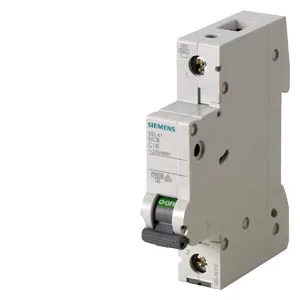
What this MCB is and what the ratings mean for your panel
The Siemens 5SL4132-8 is a 1-pole SENTRON miniature circuit breaker with a D tripping characteristic, rated 32 A at 400 V AC. The D-curve means it tolerates high inrush currents — typically 10–20× rated current before instantaneous trip — making it the right choice for motor circuits, transformers, or lighting ballasts where the startup surge would nuisance-trip a B or C curve. The 10 kA breaking capacity (rated both per EN 60898 and IEC 60947-2) tells you it can safely interrupt a fault current up to that level without welding contacts or cascading upstream. That's standard for residential and light commercial distribution boards; if your available fault current is higher, you'd need a current-limiting upstream device. At 18 mm wide (1 width unit), this breaker snaps onto a standard DIN rail and occupies a single module slot in a consumer unit or sub-panel. The 76 mm depth and 70 mm installation depth mean it fits flush in most enclosures without protruding past the busbar cover. IP20 with connected conductors is the norm for enclosed distribution boards — no special sealing needed inside a dry indoor panel.
Lifecycle and sourcing reality
The 5SL4 design is the standard SENTRON miniature breaker platform. If you're cross-referencing an older 5SL3 or a different brand's D-curve 32 A 1P, the 5SL4132-8 drops into the same DIN footprint and busbar pitch. No rewiring or busbar modification needed — same 18 mm module width, same terminal layout.
Environmental and compliance notes
Rated for ambient temperatures from -40 °C to +75 °C, with a derating influence noted at +55 °C and 95% humidity. Halogen-free and silicon-free construction matters if the panel is in a clean room or a corrosive environment where outgassing could contaminate contacts. Touch protection is built in — no live parts exposed when the breaker is installed in a distribution board with the cover closed. Mechanical service life is 10 000 switching cycles typical. That's adequate for a distribution board where the breaker operates rarely (fault protection, not daily switching). If you need frequent on-load switching, a contactor or disconnect switch would be the better choice.
