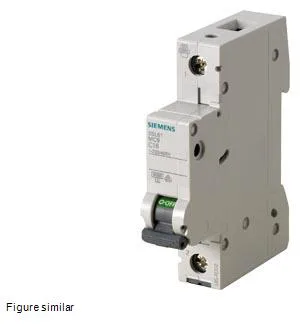
The Siemens SENTRON 5SL6116-8CC is a 1-pole miniature circuit breaker rated 16 A with a D tripping characteristic, designed to protect branch circuits in residential and infrastructure installations. It carries a 6 kA breaking capacity per EN 60898 at 230/400 V AC, which means it can safely interrupt fault currents up to 6,000 A — sufficient for most final sub-circuits in a building distribution board. The D-curve (10–20× In) makes it the right choice for loads with high inrush, like small motors, transformers, or discharge lighting, where a B or C curve would nuisance-trip on startup.
D-curve and breaking capacity — what they mean for the panel
The D-curve trips instantaneously at 10 to 20 times the rated current (160–320 A for this 16 A unit). That delay above the C-curve threshold lets motor-starting or transformer-energizing currents pass without opening the circuit, while still clearing a hard short. The 6 kA breaking capacity (per EN 60898) is the standard rating for residential and light commercial distribution boards in most European markets; if your panel requires 10 kA or higher (per IEC 60947-2), step up to the 5SL4 series — same footprint, higher interrupt rating. Rated for single-phase operation up to 250 V AC and multi-phase up to 440 V AC, this 1-pole breaker fits a single phase leg in a 230/400 V TN or TT system. The 18 mm width (one modular unit) snaps onto a standard DIN rail and occupies a single slot in a consumer unit or sub-distribution board. Depth is 76 mm, so it clears most shallow enclosures — check your gland plate clearance if the board is tight.
Physical integration and environment
Mounts in any position on a 35 mm DIN rail. The IP20 rating (with connected conductors) means it is intended for installation inside a distribution enclosure — not exposed to washdown or outdoor weather. Vibration resistance tested to 50 m/s² at 25–150 Hz per IEC 60068-2-6, so it holds up in industrial cabinets near rotating machinery. Pollution degree 2 and overvoltage category III are standard for fixed-installation breakers. Halogen-free and silicon-free construction matters if the panel serves sensitive electronics or requires low-smoke, zero-halogen materials.
