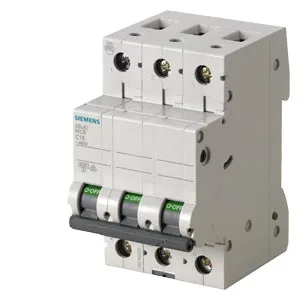
The Siemens 5SL6316-8CC is a SENTRON 5SL6CC series miniature circuit breaker, 3-pole, with a D tripping characteristic rated at 16 A and 400 V AC.
The D-curve (tripping characteristic class D) is the key selection parameter here: it tolerates inrush currents 10–20× the rated current before tripping magnetically, so it is sized for loads with high starting surges — motor-driven equipment like pumps, compressors, or small conveyors where a B- or C-curve would nuisance-trip on startup. The 16 A rating at 400 V AC covers three-phase motor circuits up to roughly 7.5 kW depending on the load profile. Wire range accepts 0.75 to 25 mm² solid or stranded, which covers everything from 1.5 mm² lighting circuits up to 6 mm² or 10 mm² feeder tails. The screw terminals call for 2.5 to 3 N·m torque — a standard driver setting, no special tooling. Sealable design means the enclosure can be locked to prevent tamper after commissioning.
Snap-on DIN rail mounting, 3 width units (54 mm wide), 90 mm height, 76 mm depth — fits standard 35 mm DIN rail enclosures. Installation depth of 70 mm leaves clearance behind the rail for wiring. Mounting position any, so vertical or horizontal orientation in the panel is fine. Vibration resistance rated at 50 m/s² from 25 to 150 Hz per IEC 60068-2-6 — adequate for industrial cabinet installations near rotating machinery.