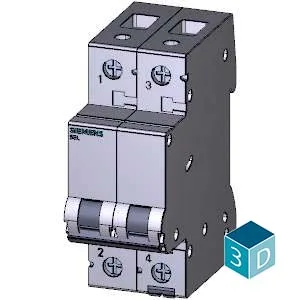
The 2-pole design (2P) switches both phase and neutral, and the unit occupies 2 modular width units (18 mm each) on a DIN rail.
The D characteristic is the key differentiator here. Compared to a C-curve MCB (common in residential or general-purpose circuits), the D-curve allows a higher multiple of rated current before the magnetic trip fires — 10× to 20× versus 5× to 10× for C. That makes this breaker a better fit for circuits feeding motors, drives, or transformers where the startup surge could otherwise trip a C-curve unit. Both are well above typical industrial service-entrance fault currents.
Physical integration and environmental notes
The housing is 18 mm wide (2 MW), 76 mm deep, 90 mm tall, with an installation depth of 70 mm behind the panel surface. The sealable design allows a lead seal or lock to prevent unauthorized switching, useful for safety circuits or critical loads.
It's vibration-tested per IEC 60068-2-6, so it holds up on machinery with moderate vibration. Power loss is 1.2 W per pole at rated current in hot condition, which adds up to 2.4 W for the 2-pole unit — negligible for panel thermal calculations but worth noting if you're packing many breakers in a small enclosure. The supply frequency range is 50/60 Hz, so it works on either mains standard without derating.