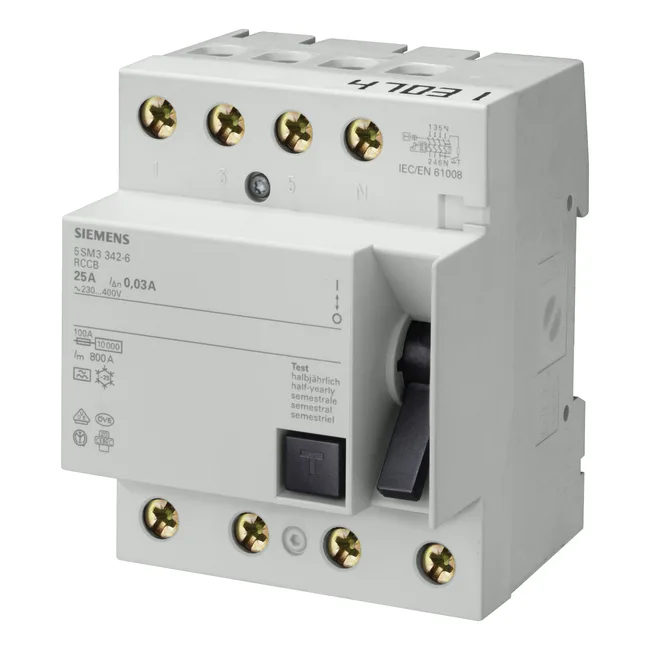
80 A, 30 mA, 400 V — the ratings that decide fit
The Siemens 5SM1347-0 is a 4-pole residual current operated circuit breaker (RCCB) from the SENTRON 5SM1 series, rated 80 A at 400 V AC with a 30 mA trip threshold. The 80 A frame covers the main incomer for a small distribution board or a heavy submain; at 45 °C ambient it holds the full 80 A, and the derating curve is published stepwise down to 64 A at 70 °C, so you can size the upstream protective device knowing exactly where the RCCB thermally limits. Type AC means it detects sinusoidal AC residual currents only — not pulsed DC or smooth DC.
Panel integration — DIN rail, 4 MW, top or bottom feed
Snaps onto DIN rail (REG profile), occupies 4 width units at 55 mm installation depth. Terminal capacity accepts 1.5 to 25 mm² solid or stranded copper; tighten to 2.5–3 N·m. The IP20 rating applies only when the distribution board is installed and conductors are connected — it's not a standalone IP20 device; the enclosure provides the environmental seal.