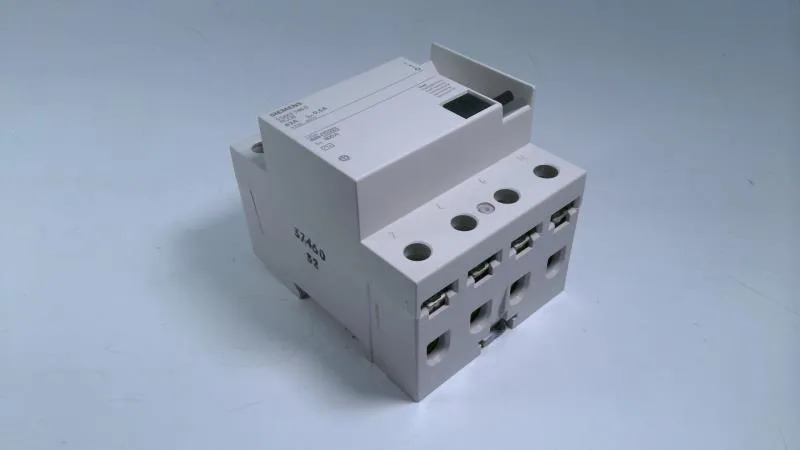
The short-time delayed design (selective type) provides coordination with downstream devices, letting fault currents pass briefly to avoid nuisance tripping on transient surges while still clearing persistent ground faults.
Rated at 63 A continuous at 40 °C and 45 °C, derating to 60.48 A at 50 °C and 50.4 A at 70 °C — the thermal curve matters if the panel runs hot. The 10 kA short-circuit current rating (SCCR) per IEC 61008-1 gives the fault-clearing capacity at the device terminals; under EN 60898 the rated breaking capacity is 0.8 kA, which is the standard for domestic RCCBs. The Type B characteristic detects AC, pulsating DC, and smooth DC residual currents up to 1 kHz — required where variable-speed drives, UPS systems, or photovoltaic inverters are on the load side, since those can generate DC fault currents that a Type A or AC device would miss. The 500 mA rated residual operating current (IΔn) is higher than the standard 30 mA for personal protection; this unit is intended for equipment protection or fire prevention in circuits where nuisance tripping from leakage currents (long cable runs, filter capacitors) would be problematic. The short-time delayed switching function (selective RCCB, type S) coordinates with downstream 30 mA RCCBs so that only the faulted branch trips, keeping supply to healthy circuits.
The 72 mm width (4 MW) matches the SENTRON modular grid.