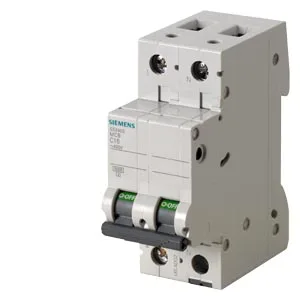
The Siemens SENTRON 5SN6580-7CN86 is a 1P+N miniature circuit breaker (MCB) with a C80 tripping characteristic, rated 80 A at 30 °C and a 6 kA breaking capacity per EN 60898. It integrates an undervoltage and overvoltage release (UVR/OVR) on a 230 V AC supply, making it a combined overcurrent and voltage-protection device for a single-phase final subcircuit. The C-curve means it handles moderate inrush from motorized or capacitive loads without nuisance tripping, while the 80 A rating suits high-demand residential or light commercial feeders.
What the ratings mean for fit
At 80 A and 6 kA, this breaker is sized for a main incomer or a high-current subfeed in a single-phase 230 V AC panel. The 1P+N configuration switches the line and switches the neutral — the neutral is not a protected pole but is disconnected when the breaker trips, which is required in some regional wiring rules (e.g., UK, Australia) for final circuits. The C80 characteristic (magnetic trip at 5–10× In) means it tolerates the starting current of a 3–4 kW motor or a bank of LED drivers without dropping out. Mechanical service life is 10 000 switching cycles typical — adequate for a distribution board where the breaker is operated infrequently (isolator duty), not for daily load-switching. The IP20 rating with connected conductors or busbars mounted in a distributor plate is standard for enclosed panel use; no washdown rating here.
Panel integration and environment
Occupies 2 modular width units (36 mm) on a DIN rail, with a depth of 76 mm and installation depth of 70 mm. Mounting position is any, so it can be installed horizontally or vertically inside the enclosure. Ambient temperature range from -40 °C to +75 °C, with periodic humidity up to 95% at +55 °C — suitable for unheated outdoor kiosks or plant-floor cabinets near process heat. Degree of pollution 2 (normal, non-conductive) and overvoltage category III (distribution level) mean it is rated for fixed installation downstream of the utility meter, not for equipment-level protection. The sealable design allows the panel builder to lock the toggle position with a padlock or seal wire — useful for utility or facility lockout/tagout.
