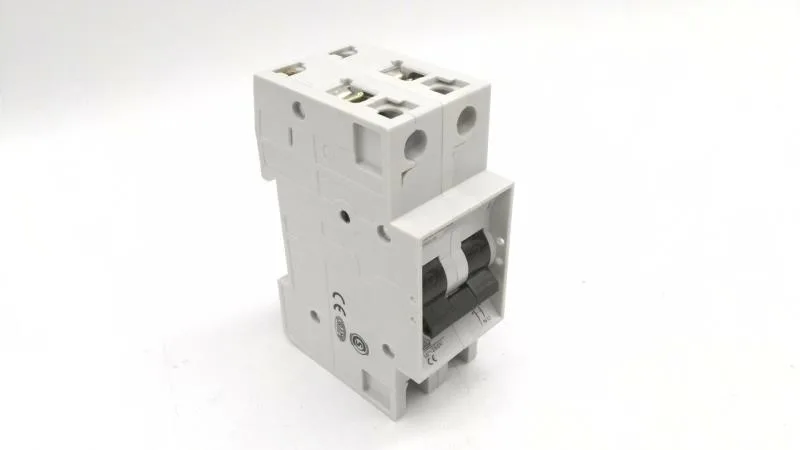
The C-curve (tripping characteristic class C) means the magnetic trip fires at 5 to 10 times rated current — so for a 25 A breaker, instantaneous trip occurs between 125 A and 250 A. That's the right choice for circuits with a modest starting surge; a B-curve would nuisance-trip on the same load, while a D-curve would let a fault ride through too long. If your available fault current exceeds 3 kA, step up to the 6 kA or 10 kA SENTRON siblings. The 1P+N design switches the neutral pole but does not protect it — overcurrent sensing is on the phase pole only. That's standard for single-phase final subcircuits where the neutral is bonded to ground at the service entrance. Verify your local wiring rules allow switched neutral without protection before specifying. The 55 mm installation depth fits flush in shallow enclosures — a common constraint in retrofit panel work where gland-plate depth is tight.
Deployment context
Snap-on DIN rail mounting, IP20 finger-safe terminals — standard for enclosed distribution boards. The AC/DC voltage type means the same breaker can be used on DC circuits up to the manufacturer's rated DC voltage (not stated here, so verify for your specific DC application). Rated for 50 Hz only; not suitable for 60 Hz systems without checking the thermal-magnetic response at the higher frequency.