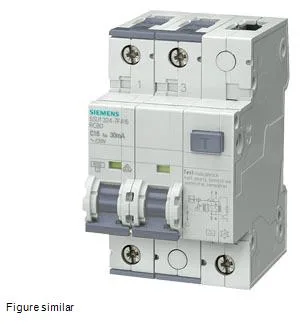
The Siemens SENTRON 5SU1324-7FA25 is a 2-pole RCBO combining overcurrent protection (C-curve, 25 A) with 30 mA residual-current protection (type A) in a single 3-module-wide unit. The 77 mm depth and 54 mm width mean it occupies three 18 mm modular spaces on the DIN rail — standard for a 2-pole RCBO in this class.
The C-curve trips between 5 and 10 times rated current (125–250 A for this 25 A unit), which is the standard choice for inductive loads like contactor coils, small motors, and control transformers — the kind of inrush that would nuisance-trip a B-curve. The 30 mA type A residual element catches pulsating DC fault currents from single-phase rectifiers or electronic loads, not just sinusoidal AC. On a mill panel that means it covers VFD input rectifiers and switched-mode supplies without needing a separate type B device. The 4 kV surge voltage resistance and overvoltage category III mean it's rated for fixed-installation use downstream of the main incoming supply, not just final circuits. Rated insulation voltage 264 V on a 230/240 V nominal system gives headroom for steady-state voltage variations without degrading the internal clearance. Operating frequency is 50 Hz — verify before deploying on a 60 Hz system; the magnetic core and trip thresholds are tuned for 50 Hz zero-crossing behaviour.
The 70 mm installation depth is the space needed behind the panel door — factor that into gland-plate clearance if the enclosure is shallow. Not rated for continuous switching duty like a contactor.