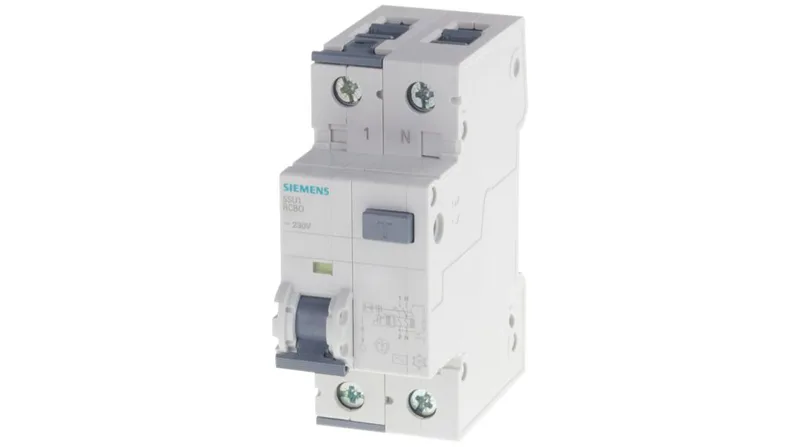
The Siemens 5SU1354-0KV10 is a combined residual-current device and miniature circuit breaker (RCBO), designated FI/LS protector, in a 1+N-pole form factor. It integrates Type AC residual-current detection (30 mA trip threshold) with a B-curve overcurrent characteristic rated at 10 A, all within a single 70 mm wide module.
In a domestic or light commercial distribution board, this covers the majority of installations where the upstream short-circuit capacity does not exceed 10 kA. The B-curve (10 A) trips between 3 and 5 times rated current (30–50 A) for fast disconnection of resistive and small inductive loads. The 1+N-pole configuration switches the line conductor and provides a switched neutral — the neutral pole opens and closes with the line, which is required in some regional wiring rules (e.g., UK, Australia) to ensure isolation on both poles when the device trips.
Deployment context
The 70 mm width (4 module spaces on a standard DIN rail) fits into residential or commercial distribution boards alongside other Siemens 5SU-series RCBOs and MCBs.