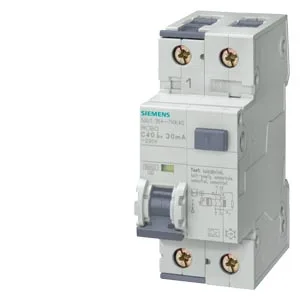
The Siemens 5SU1354-7RC16 is a SENTRON-series RCBO — a combined residual-current device (RCD) and miniature circuit breaker (MCB) in one 2-module-wide (36 mm) package. The 30 mA Type A residual-current element catches both sinusoidal AC fault currents and pulsating DC fault currents — the kind you get from single-phase rectifiers in VFDs, switch-mode supplies, and LED drivers. That Type A rating is what makes this unit a step up from a basic AC-type RCD: if your panel feeds any electronic load, Type A is the minimum you'd spec.
Either way, the 20 kA figure gives you headroom for most 400 V industrial sub-distribution boards without needing a current-limiting upstream fuse. The energy limitation class is 3 — meaning it limits let-through energy enough to protect downstream wiring and terminals in a fault event.
Mounting position is unrestricted — horizontal, vertical, upside-down, doesn't matter. Depth is 70 mm from the rail face, which is the standard SENTRON depth; it sits flush alongside 5SL-series MCBs in the same distribution board. Touch protection is built in: the live terminals are shrouded once the conductors are connected.