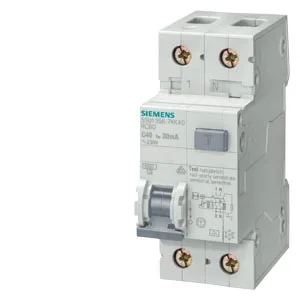
It protects a 1P+N circuit (one protected pole, switched neutral) against overloads, short-circuits, and earth faults. The C tripping characteristic means it handles moderate inrush currents common with motor starters, contactor coils, and small transformers without nuisance trips. Rated 10 A at 30 °C ambient, it derates to 8 A at 70 °C — a real concern if this RCBO sits in a crowded, warm enclosure. The full derating curve is published, so a panel builder can size it accurately for the actual operating temperature rather than guessing. The higher IEC figure matters when the RCBO is used in industrial panels with higher available fault current — it tells you the device can interrupt a 15 kA fault without welding its contacts.
Where it fits — panel and environment
Depth is 77 mm, installation depth 70 mm — the extra 7 mm is the front toggle and test button. Supply can feed from top or bottom, which simplifies busbar routing in a crowded enclosure. IP20 rating applies only when the distribution board is installed and conductors are connected — that's standard for a panel-mount device; it's not rated for wet or dusty locations. Halogen-free and silicon-free construction is a plus for environments where outgassing from a fault could corrode nearby contacts or optics — think data centers, clean rooms, or food processing lines.