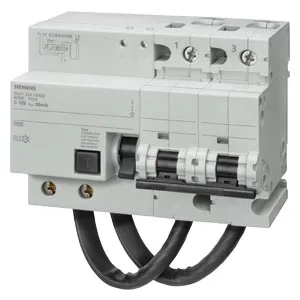
It's rated 125 A at AC (30 °C ambient), with a Type A residual current trip at 300 mA and a B-curve overcurrent characteristic.
The 125 A rating at 30 °C is the headline number, but the derating curve tells the real story for panel builders: at 40 °C it's 115.62 A, at 50 °C it's 106.25 A, and at 60 °C it drops to 96.25 A. Type A residual current detection means it catches pulsating DC fault currents — the kind rectified loads (VFDs, switching power supplies, LED drivers) produce. The 300 mA trip threshold is a selective (S-type) delay, so it coordinates with downstream 30 mA RCDs: the 300 mA unit holds during a ground fault on a branch, letting the nearer device clear first. The B tripping curve (3-5 In magnetic release) is standard for resistive and general-purpose loads — lighting, heaters, distribution panels with mixed loads. It's not intended for motor starting (where a C or D curve handles inrush), but it's the default for most building-wiring RCBO applications. The 77 mm depth and 198 mm width (7 modular width units) fit standard Siemens distribution boards and most DIN-rail enclosures with the same pitch.
Mounts in any position, with supply feed from either top or bottom.