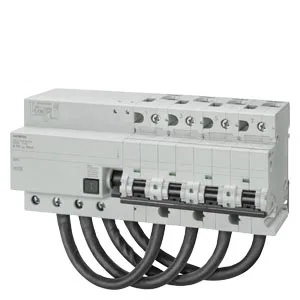
Type A is the minimum for circuits with single-phase rectification; if your line has three-phase drives with DC-link smoothing, you'd step up to type B, but for general mixed-load panels this is the right balance of protection and nuisance immunity. Conductor range accepts 0.75 to 35 mm² solid or stranded, with a tightening torque of 2.5–3 N·m on the screw terminals. That covers everything from 1.5 mm² control wiring up to 35 mm² feeder tails — no need for pin terminals or reducers on the larger sizes. The neutral is switched (neutral conductor switching enabled), which means you get full isolation on all poles when the RCBO opens.
The 92 mm installation depth fits most shallow distribution boards, but watch the gland-plate clearance if you're landing 35 mm² cables with tight bend radii. Supply can enter from either top or bottom — no mandatory orientation for line/load. IP20 with the distribution board installed and conductors connected; that's standard for enclosed panel-mount gear, not for open wet-area placement. Ambient range is -25 to +55 °C, storage from -40 to +75 °C, with max 95% humidity non-condensing. If the panel sits in a non-conditioned steel mill or outdoor kiosk, the -25 °C lower limit is fine; the +55 °C upper bound means you need to check internal panel temperature rise if the enclosure is sun-loaded.