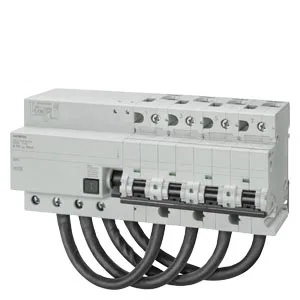
It uses a D tripping characteristic for the overcurrent element and a Type AC 300 mA residual current detection for the RCD side.
The 8-module width (roughly 144 mm on a standard DIN rail) is the physical footprint you need to reserve in the distribution board — it occupies four 18 mm pole spaces per module, so plan the enclosure fill factor accordingly. The 40 A rating governs the upstream protective device coordination and the downstream cable sizing: this RCBO is the final circuit protection, not a main switch. With a D characteristic, the instantaneous trip threshold sits at 400–800 A, which lets it ride through the magnetizing inrush of a 40 A-rated transformer or a bank of contactor coils without dropping the circuit.
RCD type and application
The Type AC residual current detection (300 mA) responds to sinusoidal AC fault currents only. For circuits with variable-speed drives, switched-mode power supplies, or UPS-fed loads, a Type A or Type B RCD would be required — the Type AC element here will not reliably detect smoothed DC or pulsed fault currents from those sources.