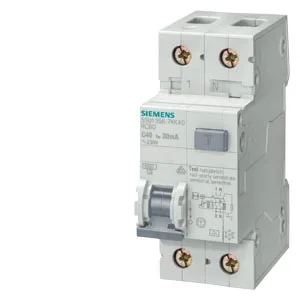
It combines a 20 A rated current (at 30 °C ambient) with a Type A residual-current sensor and a C-curve magnetic trip, all in a 36 mm wide (2 width units) package that snaps onto DIN rail. The Type A trip means it catches pulsating DC fault currents from single-phase rectifiers or switching supplies — common in modern loads like LED drivers, VFDs, and IT equipment — not just pure sinusoidal AC leakage.
Derating reality — the 20 A rating is only at 30 °C
The 20 A rated current is the headline number, but it only holds at 30 °C ambient inside the distribution board. At 40 °C it derates to 18.8 A; at 50 °C it drops to 17.4 A; at 55 °C — the upper end of the operating range — it's 16.2 A. If the panel runs hot (stacked breakers, poor ventilation, or high ambient), size the upstream load accordingly. The 6.6 W maximum power dissipation per pole matters when grouping multiple RCBOs in a small enclosure — heat buildup accelerates the derating curve.
Mounting and wiring — what fits in the panel
The 5SU1653-7KK20 occupies 36 mm of DIN rail (2 width units) with a depth of 77 mm and an installation depth of 70 mm behind the panel face. Supply can enter from either top or bottom. The IP20 rating holds only when the distribution board is installed and conductors are connected; this is a panel-internal device, not a standalone enclosure. Mounting position is any — no restriction on horizontal or vertical orientation.