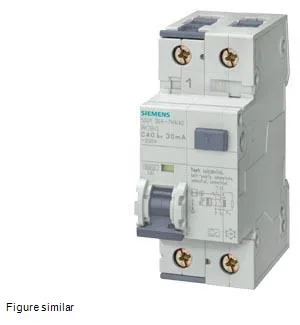
FI/LS Protector — Type A, 25 A, 300 mA, 10 kA
The Siemens 5SU1654-7KV25 is a combined residual current device and miniature circuit breaker (RCBO) in a single 1+N-pole module, rated C-curve 25 A with 300 mA sensitivity and a 10 kA breaking capacity. The Type A designation means it detects pulsating DC fault currents on top of sinusoidal AC — necessary for circuits with single-phase rectifiers, switched-mode power supplies, or variable-speed drives that generate smooth DC ripple. The 300 mA trip threshold suits it for fire-protection or equipment-protection duty rather than personnel shock protection; standard socket-outlet circuits typically call for 30 mA.
Panel Integration
The combined RCBO eliminates the need for a separate RCD and MCB in series, saving one DIN position per circuit. The C-curve (25 A) handles moderate inrush from motor-starting or capacitive loads without nuisance tripping, while the 10 kA breaking capacity coordinates with upstream Type 2 SPDs or a main breaker rated above that fault level.
The 300 mA residual sensitivity is a deliberate choice: it avoids nuisance tripping on leakage from long cable runs or filter capacitors while still providing fire protection per IEC 60364. Type A detection covers the residual-current shapes that a pure AC-sensitive (Type AC) device would miss, so it is the minimum type required by many national wiring regulations (e.g., VDE 0100-530) for circuits containing electronic loads.