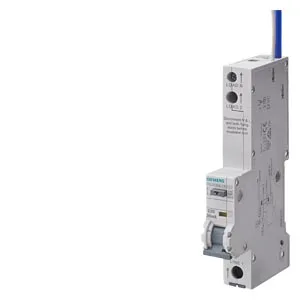
What this RCBO does on the rail
The neutral is switched and solid, with a 600 mm factory-attached pigtail for the N connection. It occupies one modular-width unit on the DIN rail, so it fits standard distribution boards without crowding the gland plate. The B-curve means magnetic trip occurs at 3–5× In (96–160 A for this 32 A unit), which suits resistive and general-purpose loads — lighting, small heaters, socket circuits — where inrush is modest. The 30 mA residual sensitivity catches direct-contact leakage and protects against fire risk from tracking faults.
Snap-on DIN rail mount, any orientation. The 18 mm width and 77 mm depth leave clearance in standard 125 mm-tall enclosures; the 70 mm installation depth accounts for the pigtail bend radius behind the rail. IP20 rating applies once the distribution board is installed and conductors are connected; the device itself is not rated for washdown environments.
The 4 kV surge voltage resistance and 1 kA surge current (8/20 µs) give it reasonable immunity to lightning-induced transients on the supply side. Energy limitation class 3 indicates it limits let-through energy to a level that protects downstream wiring in a fault condition.