What it is and what it does
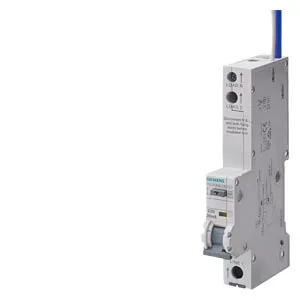
The Siemens 5SU9304-1KK16 is a SENTRON RCBO — a combined residual-current circuit breaker and overcurrent protector in a single 18 mm wide module. It protects a 1P+N circuit (line plus neutral) with a 16 A rated current, a 30 mA residual-current trip, and a type C tripping characteristic for moderate inrush loads like small motors or lighting banks. Breaking capacity is 10 kA per EN 60898 and IEC 60947-2, so it handles fault currents up to that level without needing an upstream fuse on most domestic and light commercial panels. Overvoltage category III and pollution degree 2 fit standard distribution board environments.
Key ratings and what they mean for fit
The 16 A rating is at 30 °C ambient. At higher panel temperatures the current must be derated: 15.04 A at 40 °C, 14.56 A at 45 °C, 13.92 A at 50 °C, and 12.96 A at 55 °C. If your panel runs hot, size the load accordingly or you'll nuisance-trip on the thermal element. The 30 mA residual-current trip is the standard for personal protection in most residential and commercial circuits. It's type AC, meaning it detects sinusoidal AC fault currents only — not pulsed DC or smooth DC. If your load includes VFDs, UPS gear, or LED drivers that can generate DC fault components, you need a type A or F RCBO instead. Mounting position is any, and supply can enter from top or bottom — handy when you're retrofitting into a crowded enclosure. The design is instantaneous (no intentional time delay on the residual element), so it trips fast on a ground fault.
Where it goes and how it fits
The 5SU9304-1KK16 snaps onto a DIN rail and occupies one modular width (18 mm). Installed depth is 77 mm, overall height 125 mm. It's IP20 rated only when installed in a distribution board with conductors connected — no washdown or outdoor exposure. Keep it inside a dry enclosure. Halogen-free and silicon-free construction matters if you're specifying for clean rooms, marine, or rail applications where outgassing or corrosion is a concern. The part also carries energy limitation class 3, meaning it limits let-through energy well enough to coordinate with downstream equipment in most cases.
