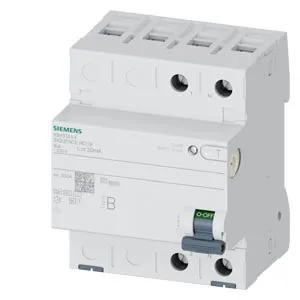
What this RCCB is and why it matters for EV charging
It's a 2-pole, Type F device rated 40 A with 30 mA residual sensitivity — but the key differentiator is the integrated 6 mA DC SIGRES function, which detects smooth DC fault currents that standard AC/Type A RCCBs miss. That matters because modern EV chargers and inverters can inject DC ripple into the protective earth, blinding a conventional RCD. This unit handles it without nuisance tripping. Rated for 230 V AC at 50/60 Hz, with a short-circuit withstand of 10 kA per IEC 61008-1, it's sized for residential and light commercial charging infrastructure where fault currents stay under that threshold. The short-time delayed design (Type F inherently includes a delay) allows selectivity with downstream 10 ms RCDs, so a fault on a single socket doesn't kill the whole board.
Depth is 70 mm, matching the standard installation depth for SENTRON distribution boards. IP20 with conductors connected — fine inside a closed distribution board; not for open wet locations.