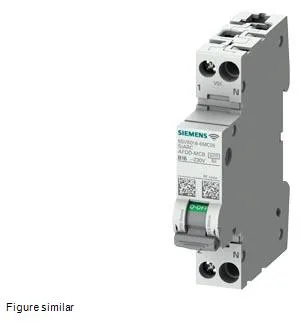
It protects a 230 V AC, 50 Hz final circuit against both overload/short-circuit (B-curve, 40 A rated current) and series or parallel arcing faults — the kind of low-energy, intermittent arcs a standard MCB won't clear. Snaps onto DIN rail, installs in any position, and the pigtail connection simplifies panel wiring.
Arc-fault detection range and what it means on the line
The AFDD electronics are rated to detect series arcs from 2 A up to 40 A (the full rated current) and parallel arcs from 50 A to 500 A. That 2 A minimum is the key figure for a commissioning engineer: a loose terminal or cracked conductor drawing only a couple of amps won't trip a 40 A MCB on its own, but the arc-fault detector catches it before it carbonizes the insulation. Parallel-arc detection up to 500 A covers the high-energy flash-over scenario.
Panel integration fit
At 18 mm wide (1 MW per DIN 43880), 90 mm tall, and 68.5 mm deep (70 mm installation depth), this unit occupies the same footprint as a standard single-pole MCB plus one extra module — no special enclosure depth needed. DIN rail (REG) snap-on mounting, any position. The pigtail (factory-attached neutral conductor) means no separate neutral bar connection for the AFDD electronics; the installer lands the pigtail on the neutral bus and the line/load on the MCB terminals.
Mechanical endurance and ambient limits
Rated for 10,000 mechanical switching cycles typical — adequate for a distribution board that sees infrequent manual operation, not for a daily-switched load. That -40 °C floor suits unheated utility rooms or outdoor-adjacent enclosures in cold climates; the 75 °C ceiling covers the top of a crowded panel in summer.