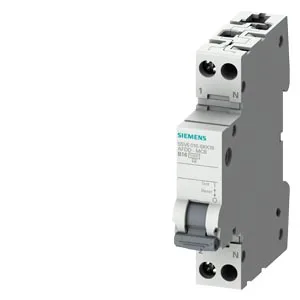
The Siemens 5SV6016-7MC20 is an arc-fault detection device (AFDD) and miniature circuit breaker (MCB) combined into a single 1+N pole unit.
The C-curve (20 A) means the magnetic trip threshold is 5–10× In, so it tolerates motor inrush and capacitive loads better than a B-curve but still clears short circuits quickly. The 1+N pole configuration switches the line conductor and provides neutral disconnection, which is standard for single-phase final circuits in many European wiring regulations. The integrated AFDD detects series and parallel arc faults (e.g., damaged cables, loose connections) and trips the MCB section, adding a layer of fire protection that a standalone MCB cannot provide. The measuring and communication capability allows integration into a building management or energy-monitoring system, though the specific protocol is not detailed in this listing.
Deployment context
The 1+N pole width (typically 2 modules) fits alongside other DIN-rail components such as RCCBs, surge arrestors, and busbar systems. The radio approval note in the description means the communication interface may use wireless frequencies; check the certificate list for country-specific compliance before installation.