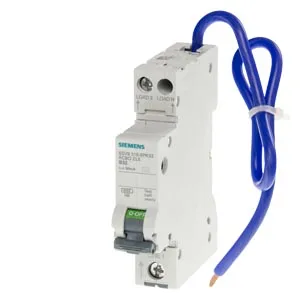
Type A RCD detection handles pulsating DC fault currents up to 6 mA superimposed on AC — covers electronics, rectifiers, and single-phase drives that a Type AC device might miss. The 30 mA sensitivity is the standard for personal protection against indirect contact (IEC 60364). B-curve tripping (3–5 × In) means the magnetic release operates between 60 A and 100 A, matching resistive or lightly inductive loads like lighting, socket outlets, or small appliances without nuisance trips from inrush. Rated at 20 A, 240 V AC, single-pole switched plus neutral. The compact 1-module width (18 mm per DIN rail pitch) saves enclosure space compared to separate RCD + MCB pairs — a consideration when filling a TP+N board with multiple final circuits.
Wire termination accepts up to 25 mm² copper conductor; torque setting per the terminal marking. The reduced i²t let-through energy aids downstream selectivity with upstream MCCBs or fuses — a coordination point for the panel designer reviewing the fault discrimination study.