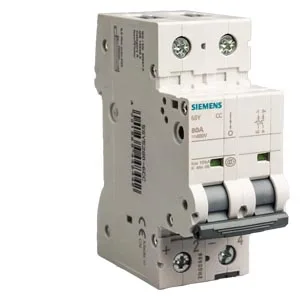
The 5SY4210-6CC: The B-curve means magnetic trip between 3 and 5 times rated current — standard for lighting and general-purpose loads where inrush isn't severe. Don't spec this for motor circuits; a C or D curve handles the higher start-up surge. The 10 kA SCCR at 400 V AC is the IEC fault-interruption ceiling; the 5 kA at AC per UL 1077 is the North American counterpart. If your panel is rated for a higher available fault current, you'll need to step up to a higher interrupting-capacity breaker.
At 36 mm wide and 76 mm deep, this occupies 2 modular-width units on a DIN rail — the quick assembly system snaps onto standard 35 mm rail. The -40 to 75 °C ambient range covers most indoor industrial environments, but above 55 °C you must derate per the humidity curve. Vibration resistance per IEC 60068-2-6 at ±1 mm / 5-25 Hz and 50 m/s² at 25-150 Hz means it holds up on machine-mounted sub-panels.
Supplementary devices and wiring
Both top and bottom terminals accept combined wiring, and the design allows installable supplementary devices — shunt trips, auxiliary contacts, alarm switches — which clip onto the same DIN footprint. The 1.3 W power loss per pole at rated current in hot operating state is low enough that derating for adjacent breakers in a multi-pole assembly is minimal, but always check the grouping factor if you're packing 10+ units side by side.