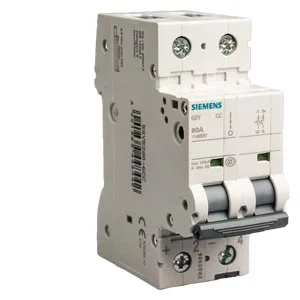
32 A C-curve MCB for panel builders
For UL 1077 and CSA C22.2 No.235 installations, the rating is 5 kA, so verify the available fault current if the panel is destined for a North American site.
That 25 kA rating is the IEC service short-circuit capacity (Ics), not just the ultimate (Icu), which means it can be reclosed after a fault at that level. The UL 1077 supplementary-protector rating of 5 kA is a different standard — this is not a UL 489 listed branch-circuit breaker, so it goes in control panels, not as a service entrance device. If the load is purely resistive (heaters, lighting), a B-curve would give faster fault clearance, but the C-curve is the standard choice for general industrial use where you need to ride through brief inrush. Temperature range spans -40 to 75 °C, which covers unheated electrical rooms and outdoor enclosures in most climates. The humidity derating curve (max 95% RH at 55 °C, dropping to 35% at 75 °C) means you need to consider condensation in sealed enclosures — the breaker itself is IP20 with connected conductors, so it's not sealed against moisture ingress.
The sealable feature lets you lock the toggle position to prevent unauthorized reset after a trip — useful on a line where only maintenance should re-energize a circuit.