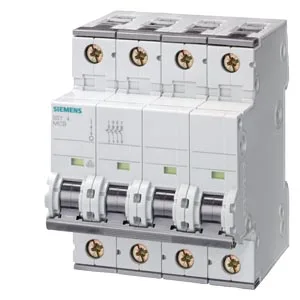
In DC circuits it still holds 15 kA at up to 72 V, so it covers battery-backed control circuits in the same panel. The neutral pole is switched but not protected (no overcurrent trip on N), which is standard for this configuration.
Where it goes — deployment context
The wide temperature range (-40 °C to +75 °C) and vibration resistance per IEC 60068-2-6 (50 m/s² at 25 to 150 Hz) mean it survives the nacelle environment: cold starts, summer heat, and the constant shake from blade pass and gearbox harmonics. No up-tower swaps if you size it right. Rated for mechanical engineering and industry applications per the manufacturer's suitability listing. The degree of pollution 3 rating means it's built for conductive dust and occasional condensation — typical in unheated industrial enclosures, not just clean control rooms.
Thermal derating — the real-world number
At 45 °C ambient the 2 A rating holds. At 50 °C it derates to 1.95 A, and at 55 °C to 1.9 A. If the panel runs hot — say next to a drive or transformer — that 1.9 A limit governs, not the printed 2 A. Factor it into the load calculation.