What the conversion stages actually buy you
The 6ES7134-7SD51-0AB0: Cycle time across all four channels reaches 320 ms at the longest integration setting, built from a 66 ms basic conversion time per channel under 60 Hz interference-frequency suppression or 80 ms under 50 Hz suppression, multiplied across the four channels. Common-mode rejection sits at 90 dB minimum, crosstalk between inputs is held to −50 dB, and linearity error runs ±0.015 % of the input range — numbers that make the module a reasonable fit for four-wire RTD piping across a process skid rather than a high-speed lab role.
Diagnostics and fault surfacing
The module reports wire-break and short-circuit on the sensor side, raises a group error on the red SF LED, and pushes a diagnostic alarm plus a separate limit-value alarm to the host. Diagnostic information is readable by the CPU, so a field wire-break surfaces as an identifiable event rather than an open reading.
Isolation map and field wiring
Galvanic isolation is provided between the channels and the backplane bus, and between the channels and load voltage L+, but not between the channels themselves — so shield grounding strategy and any per-channel grounding have to be planned as a common return. Shielded cable runs are rated up to 500 m, which covers most distributed skid layouts without an intermediate repeater.
Footprint, power, and backplane budget
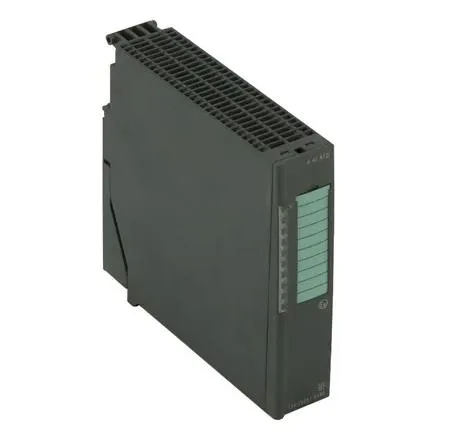
On the DIN rail the module occupies a 30 mm slice, stands 129 mm tall, and runs 136.5 mm deep at roughly 230 g — the standard ET 200S terminal-module pitch. From the backplane it draws 19 mA typical and up to 22 mA from L+, with a typical power loss of 0.4 W, leaving room in a standard ET 200S power budget for adjacent digital slices on the same station.