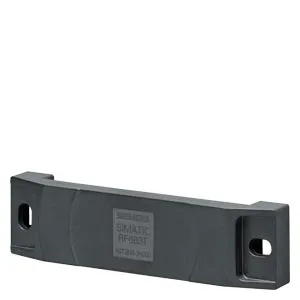
Thermal endurance — the key differentiator
What sets this tag apart is its NOMEX paper substrate and the thermal profile it enables. Outside the read/write area, the tag survives -40 to +230 °C, with short-term peaks up to 230 °C. During read/write access, the operating range is -25 to +85 °C. The permanent operating temperature is 85 °C, but it can withstand 200 °C for 6 hours, 220 °C for 1 hour, and short excursions to 230 °C. This makes it a candidate for tracking items through paint curing ovens, powder-coating lines, or high-temp sterilization cycles — applications where a standard PET or PVC tag would fail. The tag is 0.4 mm thick and made of paper (NOMEX), so it is flexible enough to attach to curved surfaces or be embedded in labels. The fastening method is screws, which means it is designed for permanent mechanical attachment rather than adhesive-only mounting — important for applications where peel strength or solvent resistance is a concern.
Memory and data management
The EEPROM-based memory supports lock, unlock, kill, write protection, and password protection commands. This allows the tag to be secured against unauthorized rewriting or to be permanently disabled (kill) at end of life — a requirement in some closed-loop asset tracking systems. The tag is multitag-capable, meaning it can be inventoried alongside other tags in the same field without collision, assuming the reader supports anti-collision (standard in Gen2 readers). The read range is stated as up to 6 m, but the system manual notes that overrange is possible and the actual range depends on the reader model and environment. For the RF600 reader system, this tag is a direct match — suitability for operation with RF600 is explicitly listed.