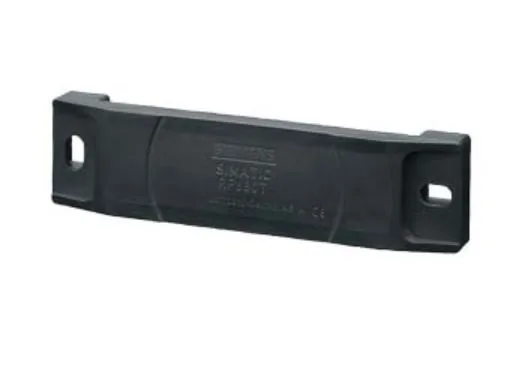
The Siemens 6GT2810-2AG00 is a SIMATIC RF690L SmartLabel PET — a UHF RFID tag built for industrial asset tracking on metal surfaces. It measures 88x25x1.6 mm, operates in the 865-868 MHz ETSI band, and uses the EPCglobal Class 1 Gen 2 / ISO 18000-63 protocol with an Alien Higgs 3 transponder chip. The IP67 rating means the tag body and internal antenna survive washdown, dust, and immersion up to 1 meter — so it'll stay readable on a tote, pallet, or tool that sees a hose-down between production runs.
The 865-868 MHz operating frequency is the ETSI UHF band for Europe; this tag won't work with North American (902-928 MHz) readers unless they're dual-band. The read range is rated up to 5 m, but that's reader-dependent — the system manual notes overrange is possible, and actual reach depends on the reader model and antenna gain. For a fixed reader with a good antenna, expect reliable reads inside 3-4 m on metal. Memory is generous for a passive tag: 96-bit EPC expandable to 480 bits (60 bytes), plus 64 bytes of user memory. That's enough to store a serial number, date code, and a few production parameters alongside the EPC. The TID memory carries the 96-bit tag ID from the Higgs 3 chip, which can be locked for anti-counterfeiting. The EEPROM supports lock, unlock, kill, write protection, and password protection — so you can secure the data against field rewrites. Temperature tolerance is where this tag earns its keep in harsh environments. Outside the read/write area, it survives -25 to +160 °C — that covers paint bake ovens, autoclave cycles, or hot washdowns. For operation (read/write access), the range is -25 to +85 °C continuous, with a peak of +95 °C permanent and up to 160 °C for three 30-minute cycles or one 90-minute cycle. That's enough for a powder-coat line or a sterilization cycle, but not continuous immersion in hot oil or molten metal.
Mounting and materials
The tag is one-side adhesive — peel and stick. The top side is PET (polyester), which takes thermal transfer printing for on-demand labeling. The beige/silver color is typical for on-metal tags; the silver backing is the antenna ground plane that isolates the tag from the metal surface. At 1.6 mm thick and 25 mm deep, it's slim enough for curved surfaces like pipe or tool handles, but the torsion and bending stress note says it's conditionally permissible — don't wrap it around a tight radius or flex it repeatedly.