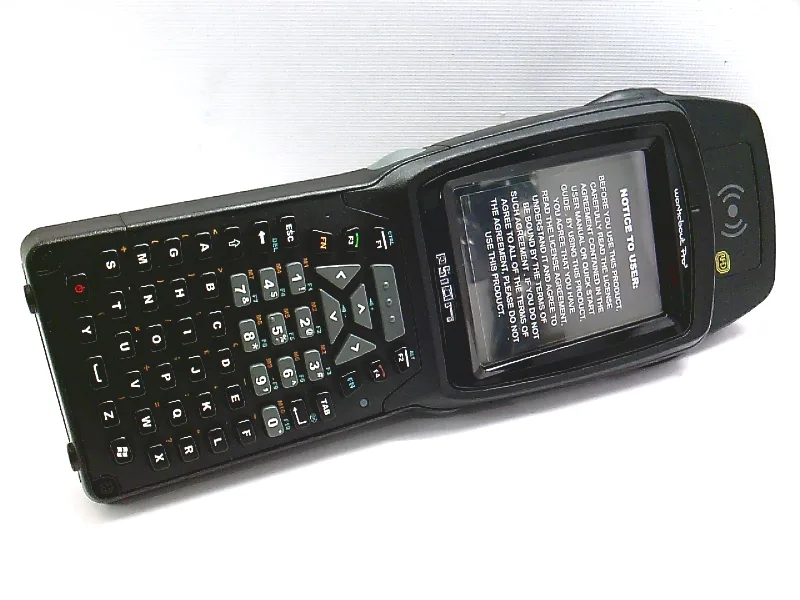
RF performance and read range
Maximum read range is 600 mm under typical conditions. The 400 kbit/s transfer rate on the radio link keeps tag reads fast enough for walk-through pallet scanning or conveyor-side gating. The linear polarization means tag orientation matters more than with circularly polarized antennas — the operator needs to align the reader face to the tag plane for consistent reads.
Physical design and environmental fit
At 92 x 265 x 42 mm (W x H x D) and IP54 rated, the RF680M handles dusty warehouse environments and rain splash — typical for a handheld used across a distribution center yard or on a loading dock. It's rated for a 1.5 m drop onto concrete, which covers the common fumble from a forklift seat height. The unit ships without a rechargeable battery installed; the standard lithium-ion pack (6GT2898-0CA00, included as an accessory) provides roughly 8 hours of typical operation. The battery is permanently integrated and not customer-replaceable — plan for a factory service when capacity degrades.
Connectivity and programming
The tether port provides RS232 and USB 1.1 for cabled communication. The docking connection uses a low-insertion-force (LIF) connector for the charging/docking station. Power can come from the battery or mains via the dock — no external power supply on the handheld itself. Programming is done through.NET and C++ via the 'RFID reader interface' API in Microsoft Visual Studio. The pre-installed RF610M.exe software handles basic transponder execution out of the box. Onboard memory is 1000 Mbyte total, with 900 Mbyte available for user data, plus 256 Mbyte of RAM.