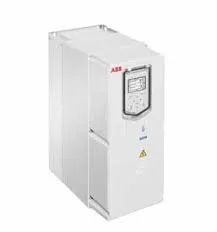
The 3AXD50000038983 is a wall-mounted HVAC drive, scaled to a 1.5 kW normal-use rating at 4 A on a 380–480 V three-phase mains. Frame R1 ships with the control unit included, in a NEMA Type 1 / IP21 enclosure sized for mounting beside an air handler. Native BACnet on the comms port is the headline for building-management integration — the same drive that talks to an AHU controller over MS/TP or BACnet/IP doesn't need a separate gateway card or third-party translator.
Ratings the panel specifier actually pins to the BOM line
Mains input is 380–480 V three-phase at 47.5–63 Hz, and normal-use output is 1.5 kW at 4 A — that's the figure the IEC motor on the BOM is matched to. The drive is also rated for two further duty points: 1.1 kW at 3.3 A heavy-duty, and 1.5 kW at 3.8 A light-overload — meaning the same hardware covers a constant-torque load (the heavy-duty column) or a variable-torque fan/pump curve (the light-overload column) without derating the build. For UL/North American panels the same chassis lists at 2 Hp light-overload with 3.4 A output, and 3.0 A heavy-duty — so when the spec is written to UL 508A the Hp and FLA column is what carries, not the IEC kW/A. Apparent-power output is 2.8 kV·A and the drive draws 60 W itself, so the upstream breaker and feeder sizing should be done off the kVA and continuous draw rather than just the motor nameplate.
Site envelope and acoustics
Rated to 1000 m altitude, maximum 40 °C ambient, and up to 95% operating humidity — install it inside that envelope and no derating applies; above 1000 m the standard VFD altitude curve takes over. Sound pressure is 59 dB(A) and standby loss sits at 14 W, both numbers that mechanical-room acoustic specs and building energy budgets tend to call out directly.
I/O map for the controls integrator
Two analog inputs and two analog outputs cover the typical sensor/actuator pairings on an AHU or chilled-water loop — leaving room for a temperature sensor and a valve feedback, for instance, without an I/O expander. Six digital inputs and three digital outputs on the control board handle interlocks, enable/run permissives, status feedback, and a couple of relay-driven field devices before any option module is needed.
Battery, compliance, and end-of-life handling
A lithium CR2032 coin cell, 220 mAh at 3 V, sits on the control board — that's the real-time-clock / fault-log retention battery, the same kind of part that surprises a tech on first service because it's the only battery on the drive. RoHS compliance is dated 20240508 against EU Directive 2011/65/EU and Amendment 2015/863, and the REACH declaration is dated 20250905 — note that the REACH entry flags substances above 0.1 mass percentage present, so a compliance officer pulling the dossier should expect a candidate SVHC list attached. The unit falls in WEEE Category 5 (small equipment, no external dimension over 50 cm), which sets the take-back stream on decommission.