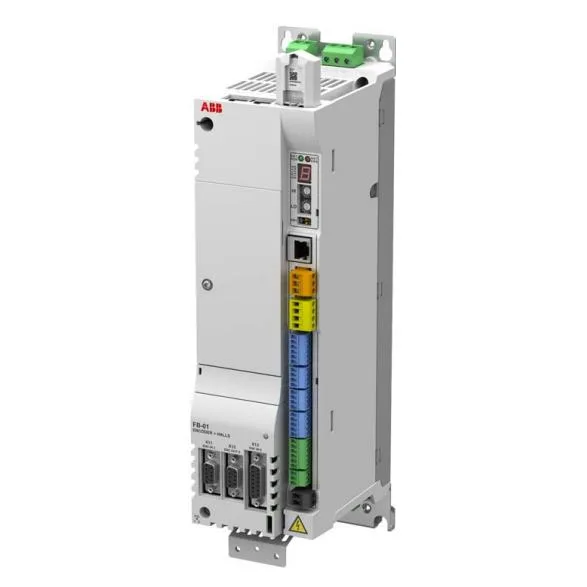
The ABB 3AXD50000384860 is a low-voltage AC servo drive in the Frame A footprint, catalogued for 3-phase input at 200–480 V and a normal-use output current of 21 A — the figure an axis sizing calculation is run against when the drive is dropped into a panel. The variant string carried on the listing is the identifier a buyer quotes into the ABB channel so the firmware option set and feedback configuration match the rest of the axis.
Ratings a sizing engineer has to read correctly
Output current of 21 A in normal use is the continuous figure, not a peak — for a servo axis the peak will be a multiple of that value over a short duty window, and the motor's thermal curve is what actually limits continuous torque above the rated current. The 200–480 V input window covers the standard three-phase feeds on record; any tap change is outside the spec list carried here. Frequency acceptance from 48 Hz to 63 Hz covers weak-mains and engine-generator sets — anything outside that window is a parameter the drive is not specified to ride, and the input contactor is what actually protects the front end. IP20 on a drive this class means it goes inside an enclosure; it is not a machine-surface or washdown-area part, and the cabinet cooling budget has to be sized against its dissipation.
Where this class of drive is deployed
Low-voltage AC servo drives in this output class typically run packaging-machine axes, converting and printing lines, and small-format material-handling servos where 21 A continuous gives enough headroom for the motor's peak torque demand without oversizing the cabinet footprint.
Same-frame sibling worth weighing before the BOM freezes
The closest same-frame candidate in the line is the 3AXD50000384884, which holds the same Frame A footprint, the same 200–480 V 3-phase input, and the same IP20 enclosure, but is rated at 28 A normal-use output versus 21 A on the 3AXD50000384860.
Lifecycle and how it is sourced
The WEEE classification recorded for the drive is 'Product Not in WEEE Scope', the line the listing gives for end-of-life handling documentation; the full compliance pack is ordered through the same ABB channel that handles the RFQ.