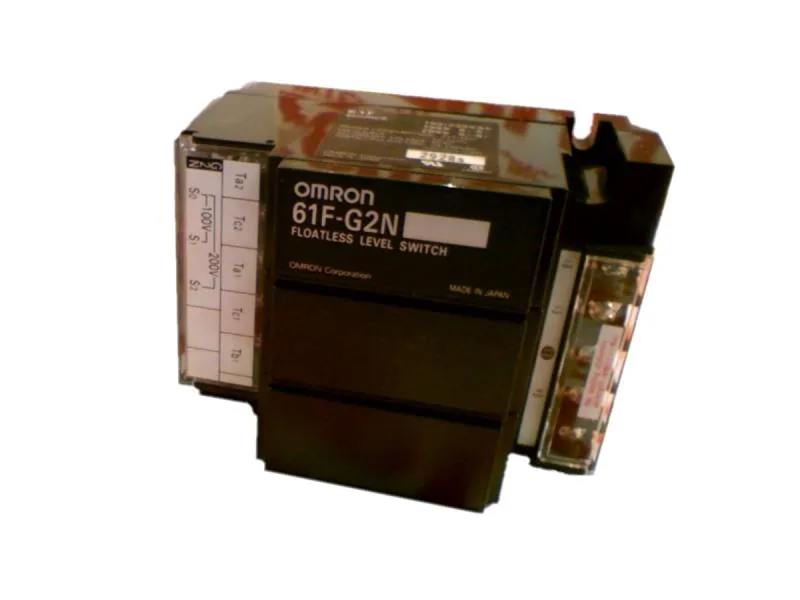
The Omron 61F-G2N AC110/220 is a conductive-type level controller from the 61F series, classified as a High/Low Level unit. It detects liquid level through the conductivity of the fluid between two or three probe electrodes, switching its relay outputs when the level crosses the set points. Supply voltage is 110/220VAC, selectable via the terminal wiring — no internal jumper to move, just connect the appropriate line and neutral. The unit accepts either voltage without reconfiguration. Sensitivity is adjustable from 0 to 4 kOhm, which covers most conductive liquids from tap water (typically 1-10 kOhm/cm) to mildly conductive process fluids. Set it to the lowest resistance that reliably triggers the relay to avoid false trips from foam or contamination.
Outputs and wiring
Two relay outputs are provided: one SPDT (1 Form C) and one SPDT (2 Form C) — the second relay is a single-pole double-throw, not a double-pole. The contact rating is 3A at 200VAC, sufficient for pilot duty on contactor coils, alarm annunciators, or small solenoid valves. Maximum distance from controller to sensor electrodes is 1 km, using three-core screened cable. At that distance, cable capacitance and leakage current matter — keep the sensitivity setting above 10 kOhm to avoid false triggering from cable leakage.
The unit is rated for indoor use only per the 61F series specifications. Production status is active per the manufacturer's current lifecycle designation.
The 0 ~ 4kOhm sensitivity range is the key selection parameter: it determines which liquids the controller can reliably detect. For demineralized water or low-conductivity solvents (above 40 kOhm/cm), this controller will not trigger — you need a capacitive or ultrasonic level sensor instead. The 1 km sensor distance is the maximum cable run between controller and electrodes, not the sensing range in the tank. The actual probe length in the vessel is limited only by the tank depth and the electrode material compatibility with the fluid. The Alarm High - Contact feature means one of the relay outputs is dedicated to a high-level alarm function, providing a normally-open or normally-closed contact that changes state when the high-level probe is wetted. This is separate from the pump-control relay.