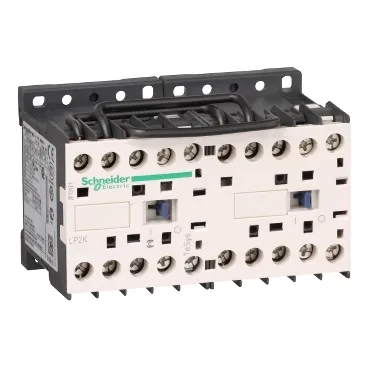
The 230 V DC coil pulls in at 0.8 to 1.15 times rated voltage and drops out between 0.1 and 0.75 Uc, which gives a clean pick-up margin even on a sagging DC bus. Rated 20 A in AC-1 utilisation category (resistive load), it handles the full thermal current of the power circuit at 50 Hz with an average impedance of 3 mOhm. Breaking capacity is 110 A at 440 V, 80 A at 500 V, and 70 A at 660 to 690 V, all per IEC 60947 — so it can interrupt a fault without welding contacts, which matters when you're swapping a motor that's locked rotor.
Screw-clamp terminals accept one or two solid conductors from 1.5 to 4 mm², or flexible with ferrules from 0.34 to 2.5 mm². Tightening torque is 1.3 N·m with a No. 2 Phillips or a 6 mm flat-blade screwdriver. IP20 finger protection per VDE 0106, so it's safe inside a locked panel but not for open-panel washdown areas. Operating altitude is 2000 m without derating; above that you'll need to reduce current or increase clearance.
The 20 A AC-1 rating is the continuous resistive load it can switch. For motor loads, you'd use the AC-3 rating (not listed here), which is lower — this contactor is designed for resistive or lightly inductive control circuits, not direct motor starting. The 3 W heat dissipation at 20 °C means it won't cook adjacent components in a crowded panel, but the inrush power is also 3 W at 20 °C, so the coil hold-in power is the same as the pull-in — a DC coil with no AC hum. Mechanical durability is 5 million cycles; electrical durability is 300,000 cycles at 20 A AC-1 at up to 440 V. Maximum operating rate is 3600 cycles per hour — one per second — which is fast enough for rapid reversing in a conveyor or transfer table. The B10d safety reliability figures are 1,369,863 cycles at nominal load and 20 million cycles at mechanical load per EN/ISO 13849-1, so it's usable in safety-related control circuits up to that statistical life.