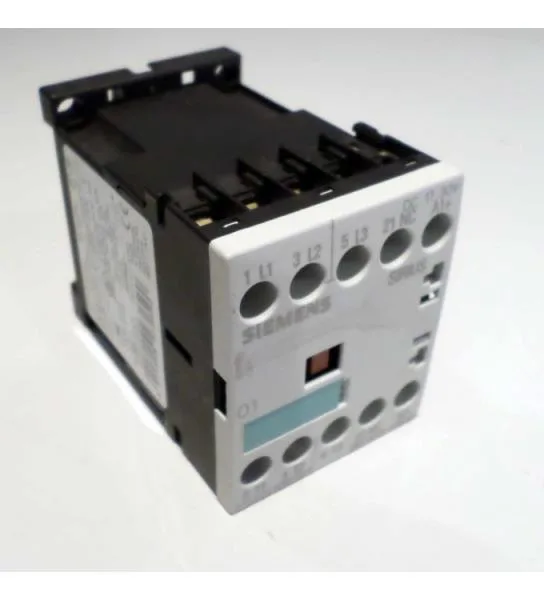
The 3RT1015-2BA41: The 3.5 kW at 400 V AC-3 rating is the number that decides fit for a motor load — AC-3 covers starting and stopping squirrel-cage motors, so that's the real-world switching capacity. For heavy-duty jogging or inching (AC-4), it's rated 6.5 A at 400 V, which is about 3 kW for a typical 400 V motor. The AC-12 rating of 10 A covers resistive loads like control transformers or heaters. Short-circuit coordination is specified: with type 2 coordination, use a gL/gG fuse rated 20 A; with type 1 coordination, a 35 A fuse. That's the factory-recommended protection for the main circuit — don't oversize the fuse or you lose the coordination guarantee. The coil operates at 24 V DC with a closing and holding power of 3.3 W. That's a constant-holding DC coil — no AC hum, and the power draw stays flat whether it's picking up or sealed in. The contactor is rated for operation up to 2,000 m altitude without derating. Above that, you'd need to account for reduced air density affecting arc extinction.
The spring-loaded terminals accept 2x (0.25 to 2.5 mm²) solid or stranded conductors, or 2x (24 to 14 AWG). No screwdriver torque check needed — spring cages are vibration-resistant and faster to wire.