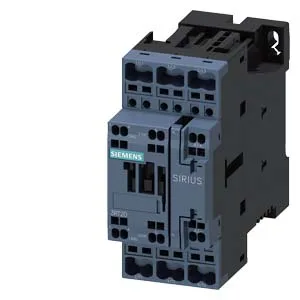
It is rated for AC-1 switching at up to 40 A and AC-3 motor duty at 18 A, making it a fit for controlling three-phase motors up to about 7.5 kW at 400 V in a standard control panel. Its 45 mm width and 107 mm depth fit the S0 frame footprint common across the SIRIUS line.
AC-1 rating (resistive load) at 40 A tells you this contactor can handle heater banks or lighting loads at that current continuously. The AC-3 rating (squirrel-cage motor starting) at 18 A is the number that governs motor switching — that is the current it can make and break under starting conditions without excessive contact wear. The 24 VDC coil pulls in at 0.8 x rated voltage and drops out reliably. The spring-type terminals accept solid or stranded wire from 1 to 10 mm², and up to 2x (0.5 to 2.5 mm²) for the auxiliary contacts. That covers most control wiring in a standard panel without needing bootlace ferrules for the main power circuit.
Integration into the panel
The S0 frame size is shared across the SIRIUS contactor range, so the footprint is consistent if you need to swap in a different coil voltage or auxiliary configuration later. The spring-type terminals on the main contacts and coil mean no screw-torque verification during commissioning — strip to the correct length and push in. The auxiliary switch is built in, so you do not need a separate side-mount block for basic status feedback.