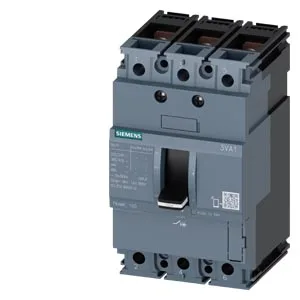
That TM210 designation means the thermal element is fixed at 63 A (the frame rating) and the magnetic short-circuit pickup is adjustable — typically 5–10× In, so about 315–630 A instantaneous trip. The 121 kA interrupting rating at 240 V AC tells you this breaker can clear a bolted fault at that level without venting or welding contacts; at 415 V it still holds 75.6 kA, and at 690 V it drops to 11.9 kA. For a 480 V panel, the relevant figure is the 415 V column — 75.6 kA SCCR headroom is enough for most industrial service entrances.
At 55 °C it derates to 60.48 A, at 60 °C to 59.22 A, at 65 °C to 57.96 A, and at 70 °C to 56.7 A.
Width is 76.2 mm (roughly 3 inches), depth is 70 mm, height is 130 mm.
What the TM210 release means in practice
The TM210 is a thermal-magnetic release with a fixed thermal element and adjustable magnetic pickup. The '210' code indicates the frame size and trip characteristics — it's the standard line-protection version, not a motor-protection or electronic release. That means it's sized for cable and busbar protection, not for motor overload curves. If you need adjustable thermal settings or ground-fault protection, you'd step up to an electronic release (e.g., ETU series) in a different 3VA variant.